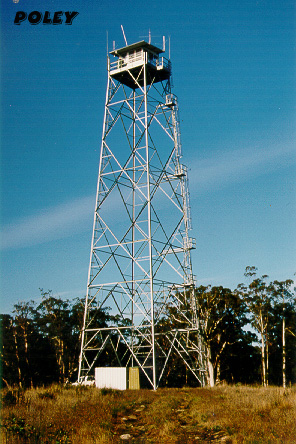
Poley 2 - CU 942349
Poley 3 - CU 915356 (current)
1964 - 1993 (second tower)
1993 - (current tower)
|
|
Grid Reference | Poley 1 - CU 903344 (tree)
Poley 2 - CU 942349 Poley 3 - CU 915356 (current) |
| Department | Melbourne Water | |
| Work Depot | Warburton | |
| Region | Port Phillip East | |
| Grading | Primary | |
| Elevation (ASL) | 1240m | |
| Height | 35m | |
| Construction | Steel | |
| Cabin size | 3m x 3m | |
| Public access to site | No | |
| In use since | 194? - 1963 (tree tower) 1964 - 1993 (second tower) 1993 - (current tower) |
|
| CFA Region | 13 - Central |

 |
 |
 |
 |
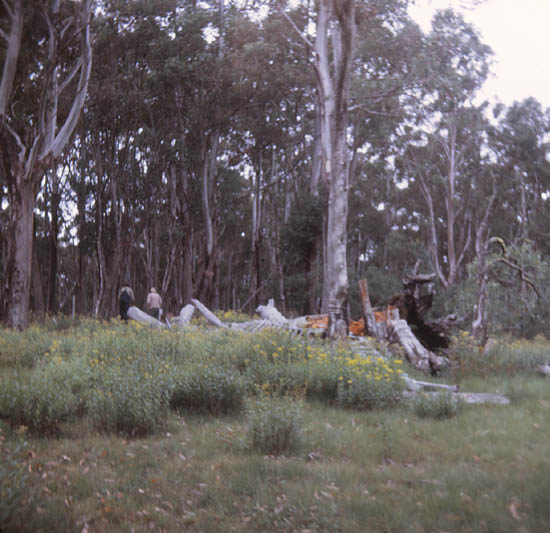
Remains of 1st Poley Tower in 1970 Supplied by Robin Fisher |
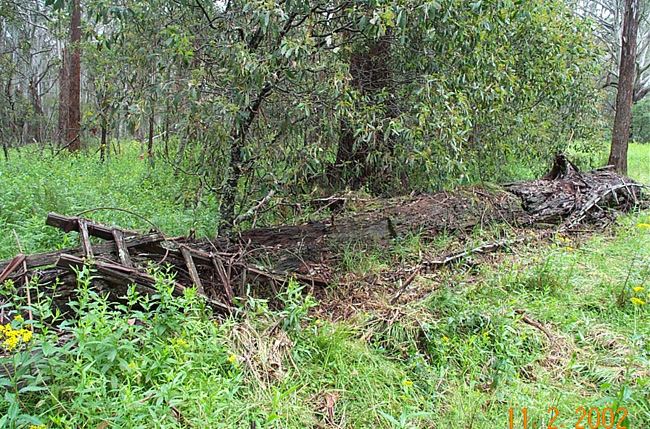
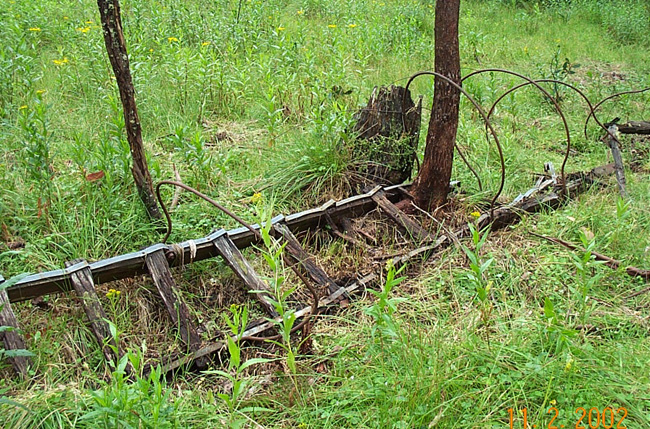
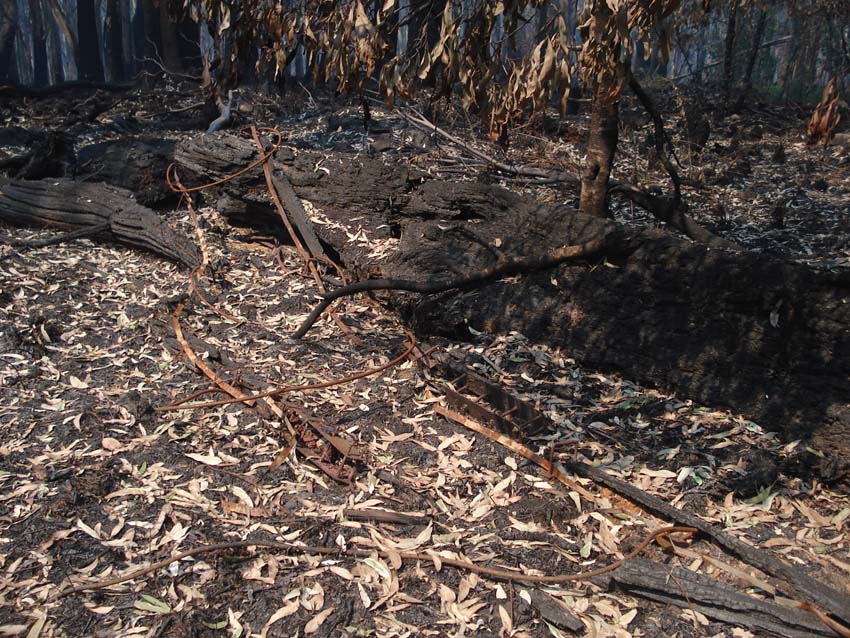
Remains of 1st Poley Tower in 2002 |
History rotting away 1st Poley Tower in 2002 |
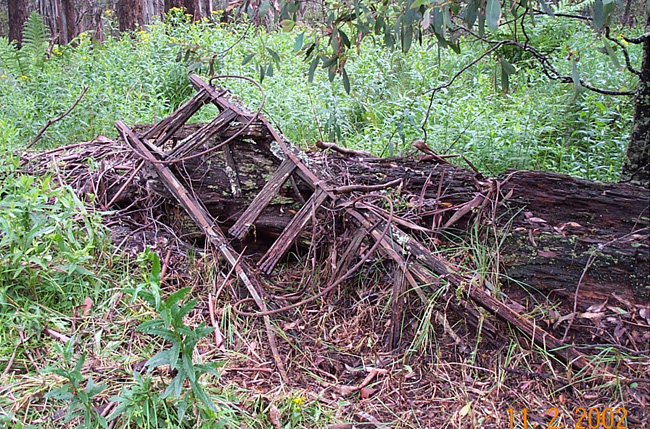
Remains of ladder 1st Poley Tower in 2002 |
 |
 |
 |
 |
 |
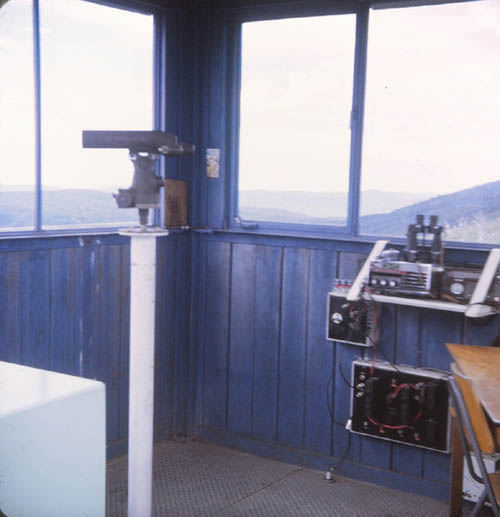
| Inside 2nd Poley Tower Supplied by Robin Fisher |
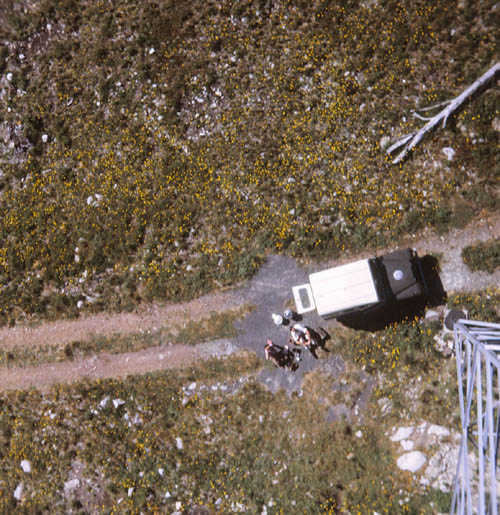
2nd Poley Tower Birdseye view Supplied by Robin Fisher |
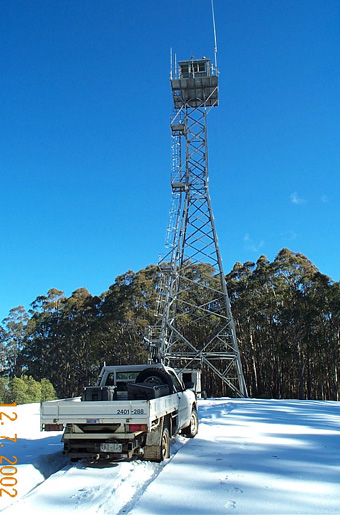
2nd Poley Tower in snow |
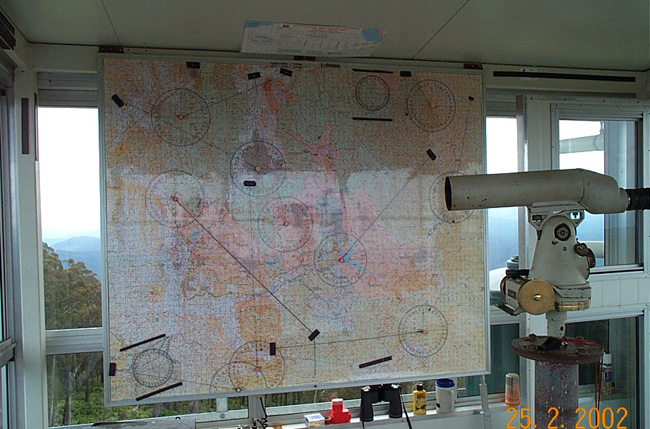
Mapboard and old scope inside current Poley tower |
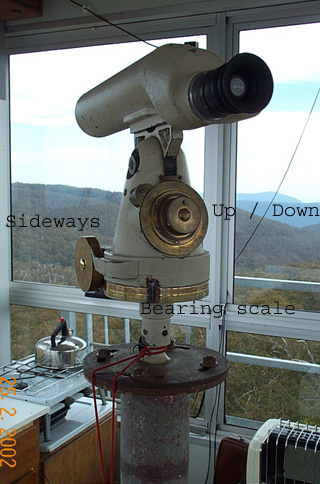
Old scope inside current Poley tower |
 |
 |
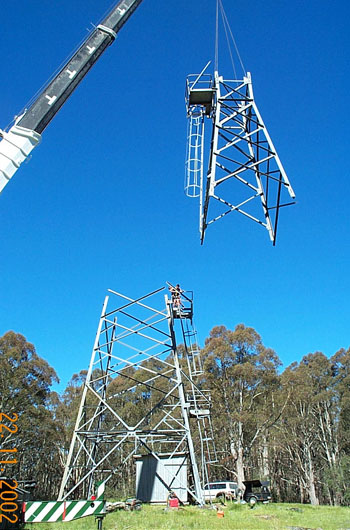 |
 |
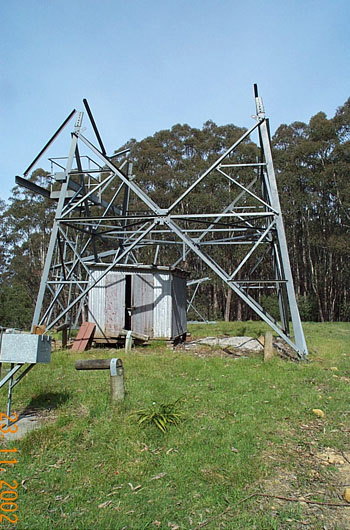 |
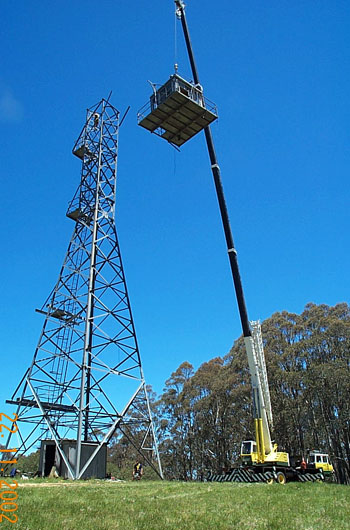
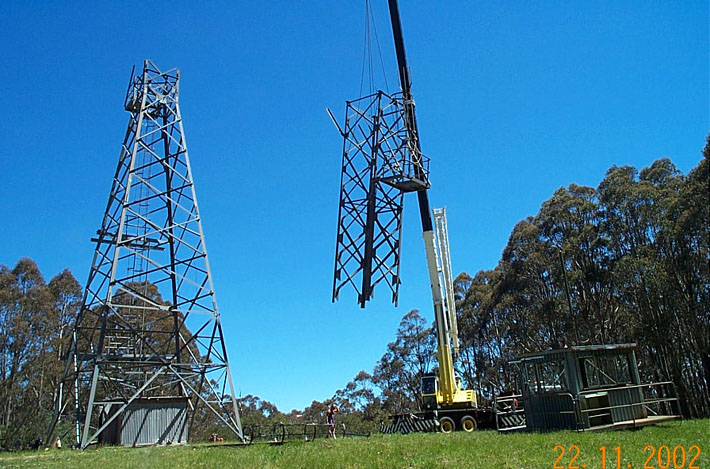
| Cabin 4 tonne |
Top section 2.5 tonne |
2nd section 3.5 tonne |
3rd section ?? tonne |
4th section before dismantling |
 |
 |
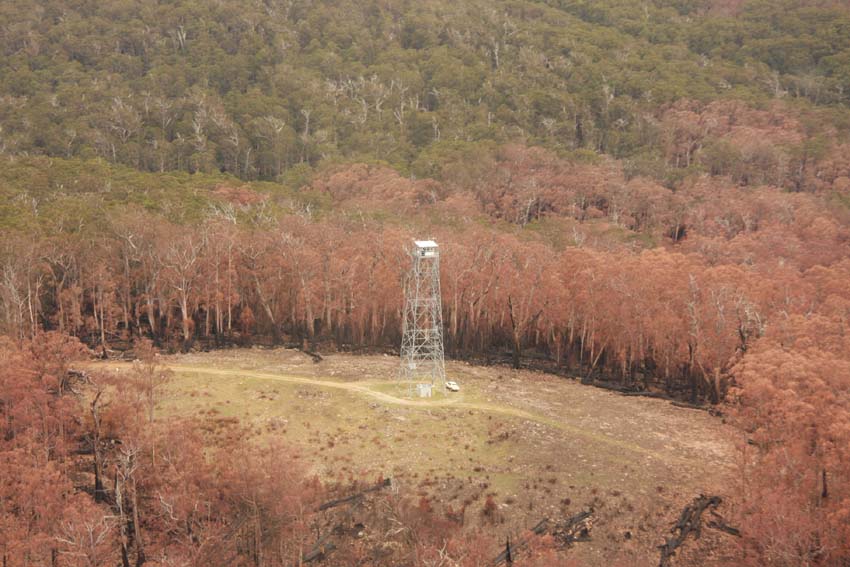 |
Remains of 1st Poley Tower after the fire has passed |
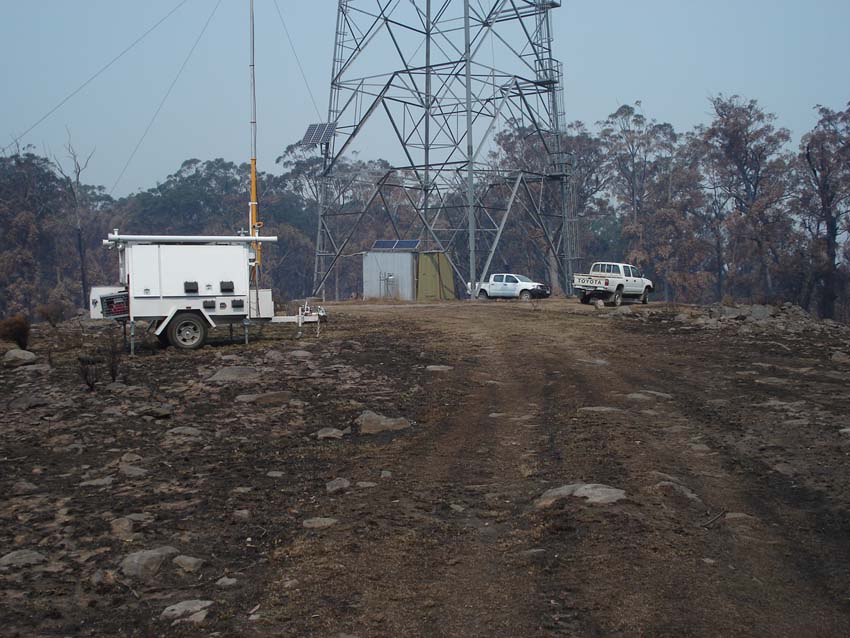
Clearing around the tower |
From the air Supplied by Cameron Padgham |
 |
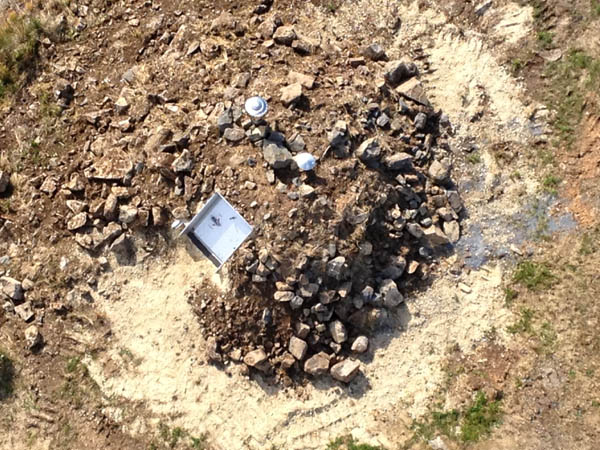 |
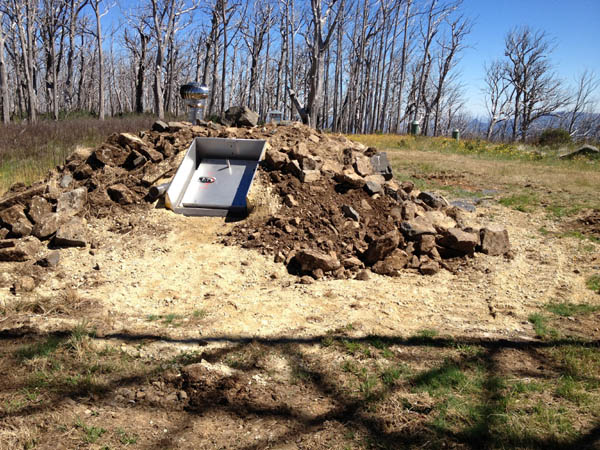
A certified Fire Bunker was installed before the 2012-13 season. The bunker couldn't be burried due to the rocky ground, so rock was placed around the unit. This will be an extra safety measure for the FLO. Melbourne Water hopes that the FLO will never find the need to use it. |
 |
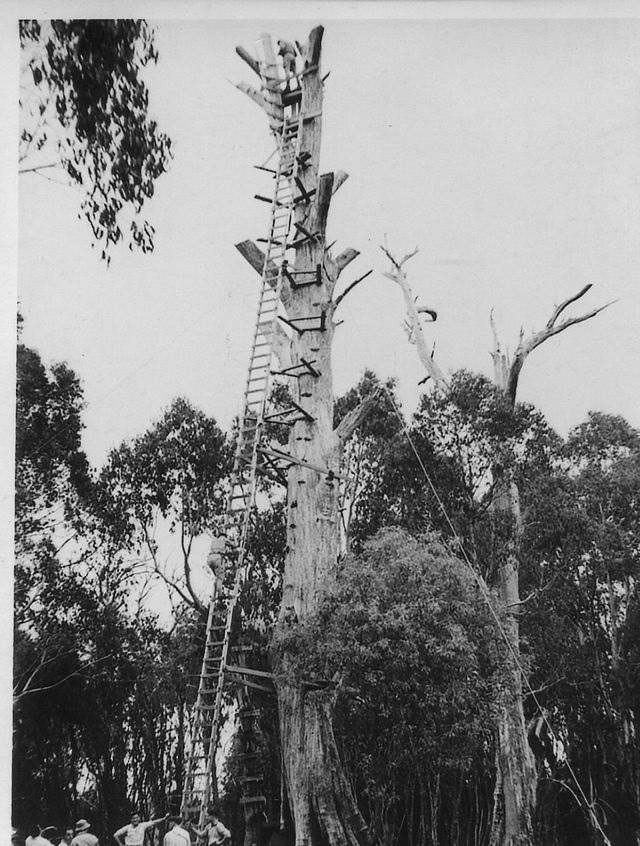 |
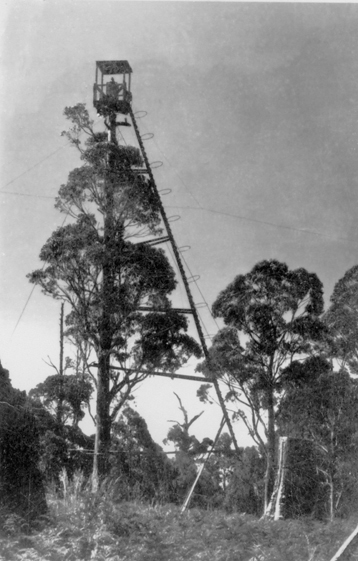
We now have 2 photos on record claiming to be the original Poley tower, which was located on Mt Ritchie. As you can see, the trees look very different. We are still researching which one is the correct one or if there were in fact 2 tree towers on Mt Ritchie. Please contact us if you can help. The first photo has hoops around the ladder and the remains that are still on site, still have a few hoops around the ladder. These are visible in some photos above. The 1st photo (with the hoops) was supplied via Graeme Seppings. The other photo, taken in 1962, was supplied by the Melbourne Walking Cub via Robin Bailey and used with permission. |